Disclosure: This post may contain affiliate links. If you buy through these links, we may earn a commission at no extra cost to you. This helps support Travel by Cycle.
Bike fit is often overlooked, yet it's one of the most important factors in cycling comfort and performance. An improperly fitted bike causes pain, reduces efficiency, and increases injury risk. Fortunately, achieving a good fit is straightforward with basic knowledge.
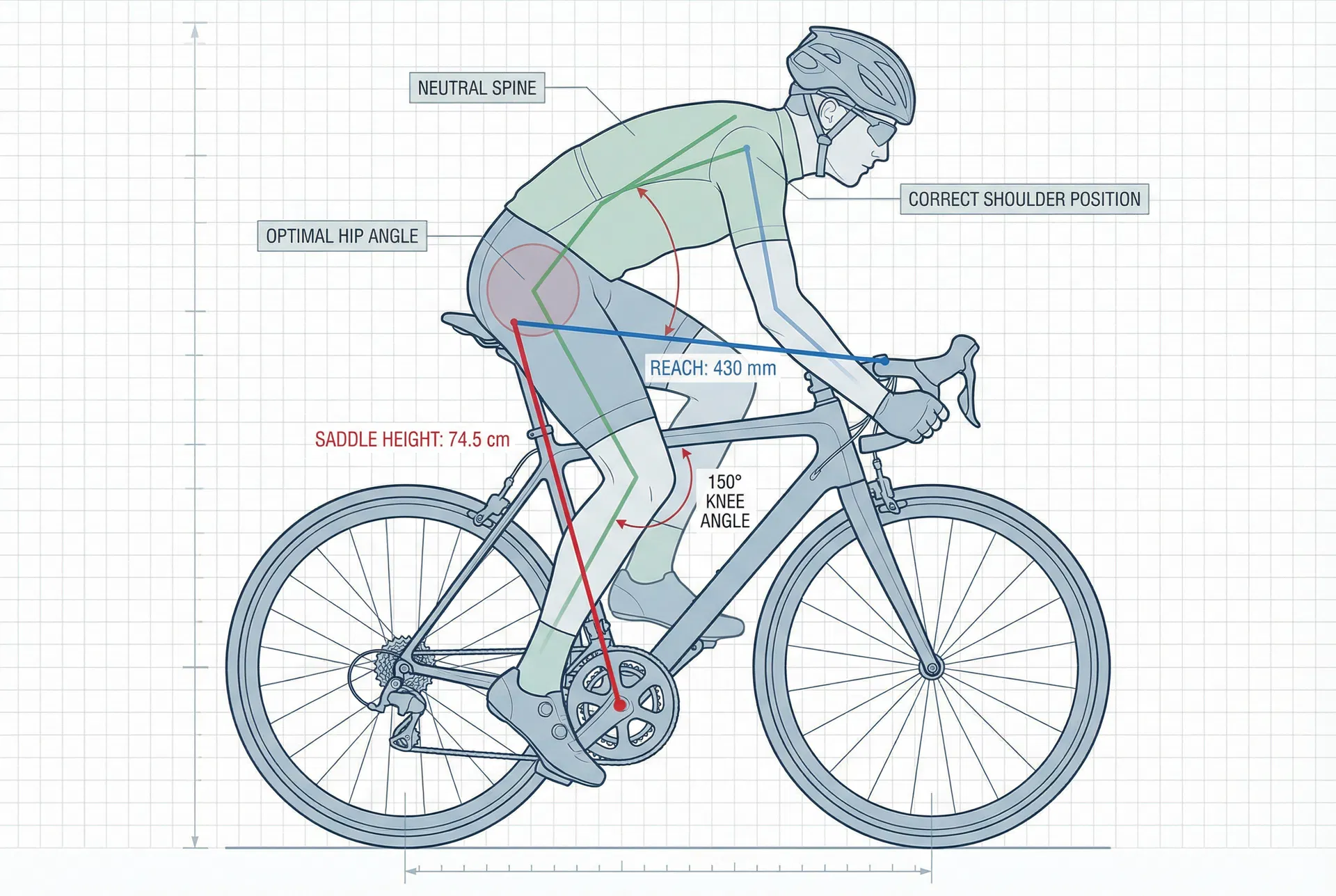
Proper bike fit involves three primary adjustments: saddle height, saddle fore-aft position, and handlebar height. Each adjustment affects how your body interacts with the bike and directly impacts comfort and power output.
Saddle Height
Saddle height is the most critical adjustment. When properly set, your leg should have a slight bend at the knee when the pedal is at its lowest point. A common guideline is the heel method: sit on the saddle, place your heel on the pedal at the bottom of the stroke, and your leg should be fully extended. When you place the ball of your foot on the pedal, there should be a 25-35 degree bend in your knee.
Too high a saddle causes knee strain and reduces power. Too low a saddle creates excessive knee bend, leading to knee pain and inefficient pedaling. Most cyclists need to adjust saddle height slightly as they become stronger or change their riding style.
Saddle Position (Fore-Aft)
Saddle fore-aft position affects your weight distribution and power application. A plumb line dropped from your knee should pass through the ball of your foot when the crank is horizontal. This position, called the "knee over pedal spindle" position, optimizes power transfer.
Moving the saddle forward shifts weight toward the front wheel, increasing comfort on climbs but reducing stability. Moving it back shifts weight toward the rear wheel, improving stability but potentially causing discomfort on climbs. Most riders find their optimal position through experimentation.
Handlebar Height
Handlebar height affects your riding position and comfort. Higher bars create a more upright position, reducing strain on your lower back and neck but increasing wind resistance. Lower bars create a more aggressive position, improving aerodynamics but increasing strain on your back and neck.
Your handlebar height should match your flexibility and riding style. Casual riders benefit from higher bars, while performance-oriented riders often prefer lower bars. Adjust gradually—your body needs time to adapt to position changes.
Reach and Stack
Reach (horizontal distance from the saddle to the handlebars) and stack (vertical distance) determine your overall riding position. These are largely determined by your bike's geometry, but you can make minor adjustments through stem length and angle.
A proper reach allows you to maintain a neutral spine with a slight forward lean. Your elbows should have a slight bend, and your shoulders should feel relaxed. If you feel stretched out or cramped, your reach may be incorrect.
Professional Bike Fitting
While basic adjustments are straightforward, professional bike fitters use advanced tools and expertise to optimize your position. They consider your flexibility, strength, riding style, and goals. A professional fit costs $100-300 but can prevent months of pain and frustration.
If you can't access professional fitting, use online resources and adjust gradually. Take notes on how different positions feel, and make small adjustments over several rides. Your body will tell you when something feels right.
Common Fit Issues and Solutions
Knee pain often indicates saddle height is incorrect. Lower back pain suggests the saddle is too far back or handlebars are too low. Neck and shoulder pain indicates handlebars are too low or reach is too long. Wrist pain suggests handlebars are too low or reach is too long.
Remember that fit adjustments take time to feel comfortable. Your body adapts to position changes gradually. Make one adjustment at a time and give yourself several rides to evaluate the change before making additional adjustments.
Affiliate Disclosure: TravelByCycle is a participant in the Amazon Services LLC Associates Program and other affiliate marketing programs. When you click on affiliate links on our site and make a purchase, we may earn a commission at no additional cost to you. We only recommend products we genuinely believe in. Learn more