Disclosure: This post may contain affiliate links. If you buy through these links, we may earn a commission at no extra cost to you. This helps support Travel by Cycle.
Nutrition is often overlooked by cyclists, yet it's one of the most impactful factors in performance and enjoyment. Whether you're riding casually or training seriously, understanding how to fuel your body properly transforms your cycling experience.
Cycling demands are unique. Unlike running, cycling allows you to consume significant calories during exercise without digestive distress. This makes it possible to maintain energy levels during long rides, preventing the dreaded bonk—that sudden loss of power that occurs when glycogen stores deplete.
Pre-Ride Nutrition
What you eat before riding sets the foundation for your performance. Eat a balanced meal containing carbohydrates, protein, and healthy fats two to three hours before riding. This provides sustained energy without causing digestive discomfort.
For early morning rides, a light snack 30-60 minutes before departure helps stabilize blood sugar. A banana with peanut butter, oatmeal, or toast with honey are excellent choices. Avoid heavy, fatty foods that slow digestion.
During-Ride Fueling
For rides under 90 minutes, water is typically sufficient. Beyond that, your body needs carbohydrates to maintain performance. Aim for 30-60 grams of carbohydrates per hour, depending on intensity and individual tolerance.
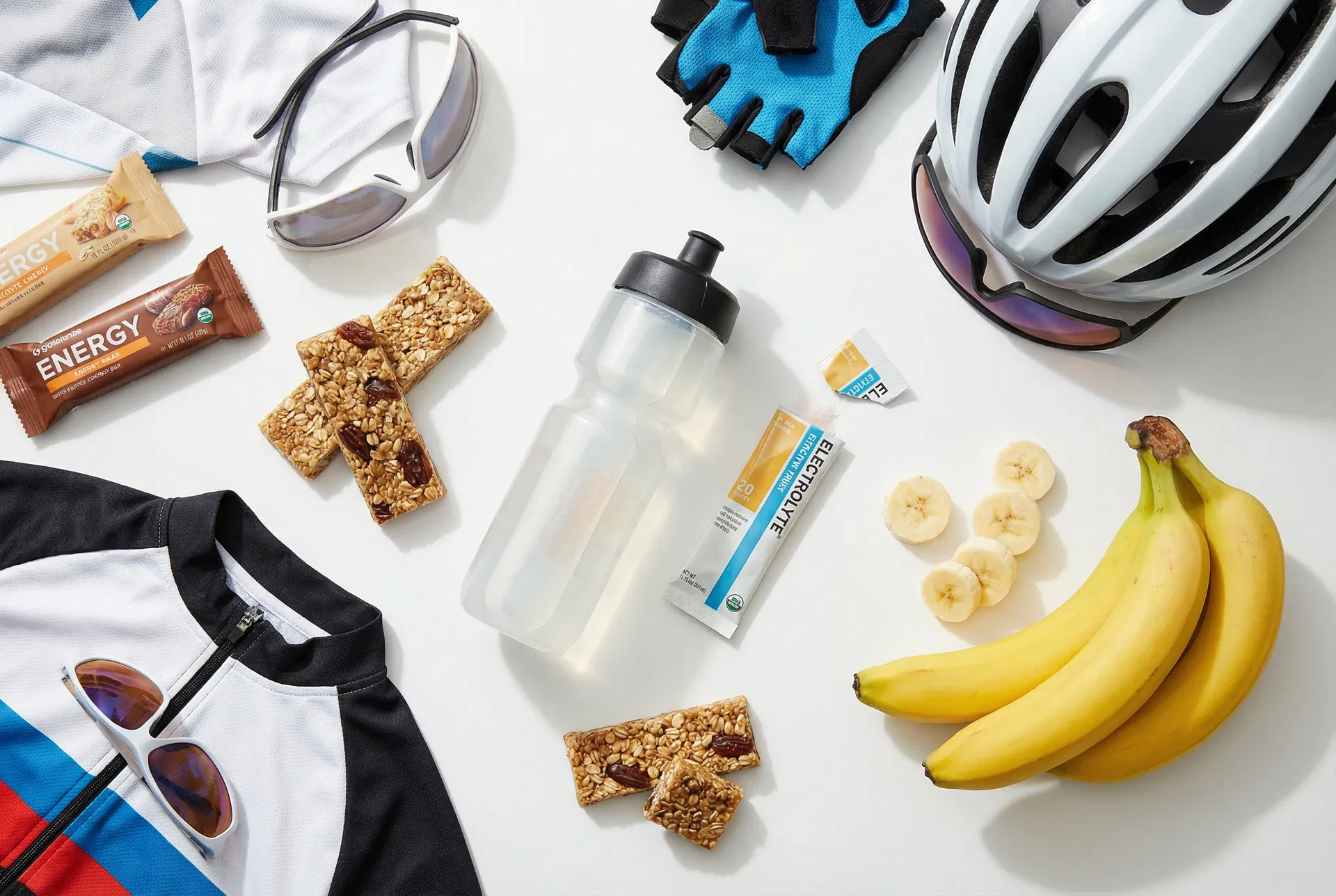
Energy bars, gels, and sports drinks are convenient options. However, whole foods like bananas, dates, and sandwiches work equally well and often digest better. Experiment during training to discover what your stomach tolerates best.
Hydration is equally critical. Drink regularly throughout your ride—don't wait until you're thirsty. A general guideline is 500-750ml of fluid per hour, adjusted for temperature and sweat rate.
Post-Ride Recovery
The hour after riding is critical for recovery. Consume carbohydrates and protein within 30-60 minutes to replenish glycogen stores and support muscle repair. A ratio of 3:1 or 4:1 carbohydrates to protein is ideal.
Good post-ride options include chocolate milk, a turkey sandwich, Greek yogurt with granola, or a smoothie with fruit and protein powder. Rehydrate thoroughly—drink 150% of the fluid you lost during the ride over the next four hours.
Long-Distance Riding
Bikepacking and multi-day tours require strategic nutrition planning. Pack calorie-dense foods that don't require refrigeration: nuts, dried fruit, energy bars, and nut butters. These provide sustained energy and don't spoil in warm conditions.
During riding days, maintain consistent fueling throughout the day. Bonking on day three of a bikepacking trip is particularly miserable when you're far from civilization. Prioritize carbohydrate intake during riding hours and eat balanced meals at camp.
Individual Variation
Nutrition is highly individual. Factors like fitness level, metabolism, and digestive sensitivity affect what works best. Keep a training log noting what you eat and how you feel. Over time, you'll develop a personal fueling strategy that maximizes performance and enjoyment.
Affiliate Disclosure: TravelByCycle is a participant in the Amazon Services LLC Associates Program and other affiliate marketing programs. When you click on affiliate links on our site and make a purchase, we may earn a commission at no additional cost to you. We only recommend products we genuinely believe in. Learn more